

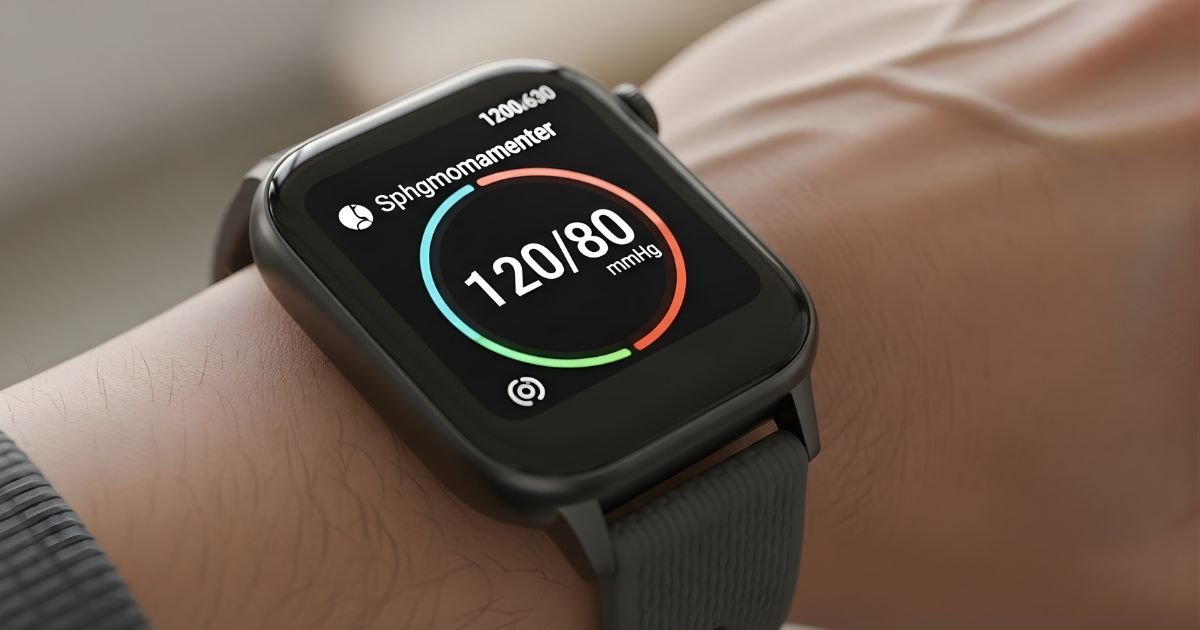
Blood pressure monitoring has evolved from those oversized cuff-based models, the kind your doctor uses, to sleek wearables that can also help track fitness. If you’ve been asking yourself, Can a Smartwatch Measure Blood Pressure, then you’re not alone.
Millions around the globe are strapping on a fitness tracker to measure and monitor their health. The short answer is it depends: Yes, some smartwatches can take your blood pressure, and they do so relatively accurately, but the experience definitely isn’t consistent across the board.
Before you start using such gadgets to make health decisions, it’s important to know how they work (or don’t), their limitation,s and which models provide accurate readings.
This expert guide is here to take you through all the ins and outs of blood pressure monitoring on smartwatches, giving you a better idea about whether or not this kind of tech has an important place in your health monitoring setup.
How Does a Smartwatch Measure Blood Pressure?
Understanding the technology behind blood pressure measurements on smartwatches helps you appreciate both their capabilities and limitations. Unlike traditional blood pressure monitors that use inflatable cuffs, smartwatches employ different methods to estimate your BP readings.
Optical Sensors and Pulse Wave Analysis
Most smartwatches use photoplethysmography (PPG) sensors—the same green LED lights that track your heart rate. These sensors detect blood volume changes in your wrist’s capillaries. By analyzing the pulse wave velocity and characteristics of blood flow, sophisticated algorithms estimate your systolic and diastolic pressure.
The technology measures how quickly blood travels through your arteries, which correlates with blood pressure levels. While innovative, this method provides estimates rather than direct measurements, which explains why accuracy can vary based on factors like skin tone, wrist position, and device fit.
Calibration Requirements
Here’s something many people don’t realize: most smartwatches that measure blood pressure require regular calibration with a traditional cuff-based monitor. This process is essential for accuracy. During calibration, you take simultaneous readings with both your smartwatch and a validated blood pressure cuff, allowing the device to adjust its algorithms to your unique cardiovascular characteristics. Depending on the manufacturer, you might need to recalibrate every few weeks or monthly. This requirement highlights an important point—smartwatches complement rather than completely replace traditional monitoring methods for now.
Can a Smartwatch Measure Blood Pressure Accurately?
When it comes to smartwatch blood pressure monitoring, accuracy is the million-dollar question. The response, as with all things, depends on how you look at it: the device you’re looking at, what kind of usage, and even what other devices you compare to.
Clinical studies show mixed results. Some modern smartwatches compare closely to traditional blood pressure monitors (within 5-10 mmHg) under controlled situations, while others are further off. The IEEE Standard on wearable unobtrusive blood pressure monitoring system demands ±5 mmHg of accuracy for systolic and diastolic measurements.
And very few mainstream smartwatches that exist today can guarantee this level of performance across a wide number of people. Determinants of accuracy are inappropriate cuff position, movement during the measurement, arrhythmias, arterial stiffness,s and room temperature. Your own biology, too, matters; what’s effective for one person may be less so for another.
Which Smartwatches Can Monitor Blood Pressure?
Not all smartwatches offer blood pressure monitoring, and among those that do, capabilities vary widely. Here’s Can a Smartwatch Measure Blood Pressure.
Samsung Galaxy Watch Series
Samsung has been a pioneer in smartwatch blood pressure technology. The Galaxy Watch 5, Watch 6, and Watch 7 series include the Samsung Health Monitor app with BP tracking functionality. These devices use PPG sensors combined with electrical sensors for electrocardiogram (ECG) capabilities.
You’ll need to calibrate the watch every four weeks using a traditional cuff monitor. The feature has received regulatory approval in numerous countries, though availability varies by region. Users report reasonable accuracy for trend monitoring, though individual readings can fluctuate.
Omron HeartGuide
The Omron HeartGuide takes a different approach—it’s actually an oscillometric device that uses an inflatable band around your wrist, similar to traditional monitors but miniaturized. This watch physically inflates to measure blood pressure, making it more accurate than optical sensor-based devices.
It’s FDA-cleared as a medical device in the United States, giving it credibility that most smartwatches lack. The trade-off? It’s bulkier, more expensive, and less versatile as a general-purpose smartwatch compared to Samsung or Apple offerings.
Apple Watch Limitations
Notably, as of 2026, Apple Watch does not offer built-in blood pressure measurement despite persistent rumors. While the device tracks numerous health metrics including heart rate, ECG, and blood oxygen, blood pressure monitoring remains absent from its feature set. Apple reportedly continues researching the technology but hasn’t released it commercially yet.
Step-by-Step Guide: Using Your Smartwatch for Blood Pressure Monitoring
If you’ve decided to use a smartwatch that can measure blood pressure, following proper procedures ensures the most accurate results possible.
Step 1: Initial Calibration
First, obtain a clinically validated upper-arm blood pressure cuff—wrist cuffs for calibration aren’t recommended as they’re generally less accurate. Sit quietly for five minutes before taking measurements. Position your arm at heart level, supported on a table.
Take three consecutive readings with your traditional monitor, waiting 1-2 minutes between each reading. Average these three readings. Now, immediately take a reading with your smartwatch, keeping your wrist at the same heart level. Input the cuff reading into your smartwatch app when prompted. Your device will use this as a baseline for future measurements.
Step 2: Daily Monitoring Routine
Consistency is key for meaningful blood pressure tracking. Take measurements at the same times daily—many experts recommend morning readings before caffeine or exercise, and evening readings before dinner.
Sit in a comfortable chair with back support. Rest your wrist on a table at heart level. Remain still and silent during measurement. Avoid caffeine, exercise, or smoking for at least 30 minutes before checking. Your smartwatch should display systolic (top number) and diastolic (bottom number) readings within seconds.
Step 3: Recording and Interpreting Results
Most smartwatch health apps automatically log your readings, creating trends over time. Review weekly and monthly averages rather than obsessing over individual readings—blood pressure naturally fluctuates throughout the day.
Normal blood pressure is below 120/80 mmHg. Elevated readings consistently between 120-129 systolic and less than 80 diastolic warrant lifestyle modifications. Readings consistently at 130/80 or higher require medical consultation. Look for patterns rather than isolated spikes—stress, poor sleep, or high sodium intake can temporarily elevate readings.
Step 4: Regular Recalibration
Set reminders to recalibrate your smartwatch according to manufacturer recommendations—typically every 2-4 weeks. Skipping recalibration leads to increasingly inaccurate readings as your cardiovascular system changes over time.
The recalibration process is identical to initial calibration: take reference readings with your validated cuff monitor and input them into your smartwatch. This maintenance step is non-negotiable if you want reliable data.
Benefits of Smartwatch Blood Pressure Monitoring
Knowing pros will help you to decide whether this technology suits your health handling approach. There are a number of other attractive advantages that smartwatch monitoring has over more traditional methods.
The whole convenience thing is huge. With blood pressure monitoring at your fingertips, anytime and anywhere, you can check more often to get a better picture of pattern-based cardiovascular health.
You’d be able to test your pressure in real-world scenarios work stress, post-exercise jitters, or when you had symptoms and not just at the doctor’s office. This overall view can reveal triggers and patterns that otherwise wouldn’t be seen.
The automatic logging reduces the burden of manual record-taking, and many apps create reports you can share directly with your health care provider.
Recurring consciousness is also associated with better health behaviors. When you get instant feedback on how your lifestyle choices affect your blood pressure, you’re more likely to make good ones.
Limitations and Considerations You Should Know
Despite technological advances, smartwatch blood pressure monitoring has significant limitations that users must understand before depending on these devices for health decisions.
Medical Grade vs. Consumer Devices
Most smartwatches are classified as wellness devices rather than medical devices. This distinction matters because medical devices undergo rigorous clinical validation and regulatory approval processes, while wellness devices have looser standards.
Only devices specifically cleared by regulatory bodies like the FDA, CE marking in Europe, or similar authorities should be used for medical decision-making. Even then, they’re typically approved for monitoring, not diagnosing conditions. Your doctor won’t adjust hypertension medications based solely on smartwatch readings without confirmation from clinically validated equipment.
When NOT to Rely on Smartwatch Readings
Certain situations require traditional blood pressure monitoring instead of smartwatch technology. If you have arrhythmias (irregular heartbeats), smartwatch algorithms often produce inaccurate readings since they rely on consistent pulse waves.
During pregnancy, blood pressure changes require medical-grade monitoring. If you’re experiencing symptoms like severe headaches, chest pain, vision changes, or difficulty breathing—potential signs of hypertensive crisis—use a validated device and seek immediate medical attention rather than checking your smartwatch.
For initial hypertension diagnosis, doctors require multiple readings with calibrated equipment, not smartwatch data.
Comparing Smartwatch and Traditional Blood Pressure Monitors
Understanding how smartwatches stack up against traditional monitors helps set realistic expectations about what wearable technology can and cannot do.
| Feature | Traditional Cuff Monitor | Smartwatch Monitor |
| Accuracy | ±3 mmHg (clinically validated) | ±5-15 mmHg (varies by device) |
| Medical Approval | FDA/CE approved for diagnosis | Mostly wellness devices |
| Convenience | Requires specific setup time | Measure anytime, anywhere |
| Cost | $25-100 for quality devices | $200-500+ for BP-enabled watches |
| Calibration Needed | Self-calibrating or minimal | Regular recalibration required |
| Additional Features | BP measurement only | Fitness tracking, notifications, apps |
This comparison reveals that each type serves different purposes. Traditional monitors remain the gold standard for accuracy and medical reliability, while smartwatches excel at convenient trend monitoring and lifestyle integration. The ideal approach for many people involves using both—traditional monitors for validation and medical decisions, smartwatches for daily tracking and awareness.
The Future of Blood Pressure Monitoring on Wearables
Wearable blood pressure is very much a technology in flux, however, with some promising advancements waiting around the corner to overcome present limitations. Worldwide, specialized investigators are advancing calibration-free systems that rely on cutting-edge AI and machine learning algorithms trained to learn an individual user’s cardiovascular patterns.
Some of the experimental devices are based on radar technology or acoustic sensors, and if they could dispense with optical sensors altogether, theoretical accuracy might improve across a broader range of skin tones and body types.
Integration with continuous glucose monitors, ECG sensors,s and other health data would give a complete cardiovascular risk score from one wrist-borne device. Some companies are working to find regulatory pathways that could enable these smartwatches to be classified as medical devices, a change that would alter how doctors and patients could use them.
Apple and Google (via Fitbit), as well as other major tech companies, all cloud the crystal ball by remaining deeply invested inresearch onh blood pressure. Certainly, patents and research papers indicate that we are on the brink of exciting developments in sensor technology and signal processing.
We might have smartwatches in the next few years as accurate as a standard monitor without having to calibrate it — this changes home health monitoring quite fundamentally.
Conclusion
So, Can a Smartwatch Measure Blood Pressure? Yes, several models offer this capability, but with important caveats about accuracy, calibration requirements, and appropriate use cases. Smartwatches equipped with blood pressure monitoring provide valuable tools for tracking cardiovascular health trends, encouraging healthy behaviors, and maintaining awareness between doctor visits.
However, they currently complement rather than replace traditional cuff-based monitors, especially for medical decision-making. If you’re considering a smartwatch for blood pressure monitoring, choose devices with regulatory approval in your region, commit to regular calibration, and use readings as trend indicators rather than absolute diagnostic values.
The technology works best for people already managing their blood pressure who want convenient daily monitoring and motivation for healthy lifestyle choices.
