

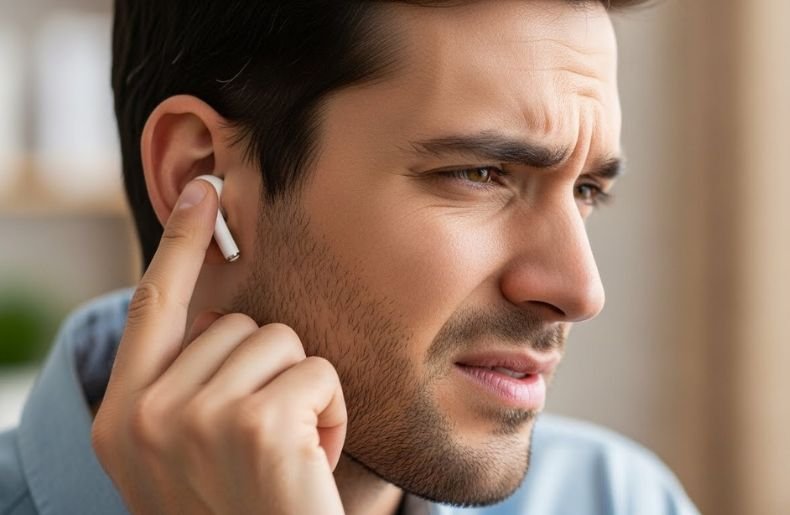
If you’ve ever pulled out your AirPods after a long listening session and felt that nagging ache in your ears, you’re not alone. Millions of AirPods users experience ear discomfort, ranging from mild irritation to genuine pain.
While these sleek wireless earbuds have revolutionized how we listen to music, take calls, and consume content, they come with an unexpected downside. The question isn’t just whether can AirPods cause ear pain about understanding why it happens and what you can do about it.
From pressure points and poor fit to extended wear time and underlying ear sensitivity, various factors contribute to this surprisingly common problem. Let’s dive into the real reasons behind your ear discomfort and explore practical solutions.
Why Do AirPods Cause Ear Pain?
The relationship between AirPods and ear discomfort stems from several interconnected factors. Unlike traditional headphones that rest over your ears, AirPods sit directly inside your ear canal, creating continuous contact with sensitive cartilage and skin. This constant pressure, even when minimal, can trigger discomfort over time.
The human ear is remarkably sensitive, packed with nerve endings that weren’t designed for prolonged foreign object placement. When you insert AirPods, they rest against specific pressure points within your ear.
For some people, this contact feels perfectly fine initially, but as hours pass, those same pressure points become increasingly irritated. The rigid plastic design of AirPods doesn’t conform to your unique ear shape—instead, your ear must accommodate the earbuds’ fixed dimensions. Another critical factor involves the one-size-fits-all design philosophy that Apple employs.
While AirPods work wonderfully for ears that match Apple’s reference dimensions, many users have ear canals that are either slightly smaller or larger. This mismatch creates either excessive pressure (if your ears are smaller) or constant readjustment needs (if your ears are larger), both of which lead to discomfort. Additionally, the weight distribution of AirPods, though light, still creates a subtle pulling sensation that your ears must constantly counteract.
Common Types of Ear Pain from AirPods
Sharp, Localized Pain
This type of discomfort typically manifests as a pointed ache in specific areas where the AirPods make direct contact. You might feel it at the entrance of your ear canal, along the tragus (the small pointed flap of cartilage), or deeper inside. Sharp pain often indicates that the earbuds are pressing too firmly against cartilage or that your ear anatomy isn’t compatible with the AirPods’ shape. Some users describe this as a “stabbing” sensation that worsens the longer they wear their earbuds.
Dull, Throbbing Ache
A more generalized pain that spreads throughout your entire ear area suggests pressure buildup or inflammation. This type of discomfort often develops gradually, starting as barely noticeable and intensifying over hours. The dull ache may extend to your jaw, temple, or even down your neck, indicating that the issue has progressed beyond simple contact irritation to involve surrounding muscles and tissues.
Itching and Irritation
Sometimes the problem isn’t pain exactly, but an overwhelming urge to scratch inside your ears. This allergic reaction or sensitivity response often results from materials in the AirPods (certain plastics or coatings) or from trapped moisture and bacteria. Itching can quickly escalate to painful inflammation if you succumb to scratching, creating a problematic cycle.
How to Prevent Can AirPods Cause Ear Pain
Limit Your Continuous Wear Time
The simplest solution is also the most effective. Set a timer to remind yourself to remove your AirPods every 60-90 minutes. During these breaks, give your ears at least 10-15 minutes of rest. This practice prevents the cumulative pressure buildup that leads to pain. If you’re working or studying, use these breaks to stand up, stretch, and reset both your ears and your posture.
Ensure Proper Fit and Positioning
Insert your AirPods correctly by gently twisting them into place rather than pushing them straight in. The stem should point slightly forward, following the natural angle of your ear canal. If you constantly need to readjust them, they’re probably not sitting correctly. Consider trying AirPods Pro, which offer multiple silicone ear tip sizes for a customized fit that distributes pressure more evenly.
Clean Your AirPods Regularly
Buildup of earwax, skin cells, and debris creates texture changes that increase friction and irritation. Clean your AirPods weekly using a soft, dry cloth and a dry cotton swab for crevices. Never use liquids directly on the speaker mesh. For deeper cleaning, use a slightly dampened cloth with isopropyl alcohol (70% or less), but avoid getting moisture in the speaker openings.
Reduce Volume Levels
Surprisingly, can AirPods cause ear pain isn’t just about physical pressure. Excessive volume creates acoustic pressure that fatigues the delicate structures inside your ear. Keep your volume at 60% of maximum or lower, following the 60/60 rule: no more than 60% volume for no more than 60 minutes at a time. Your ears will thank you.
Signs Your AirPods Are Causing Ear Pain
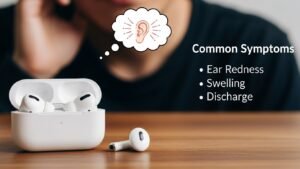
Pay attention to these common warning signs:
- Soreness or tenderness after removing AirPods
- Redness around the ear canal
- Itching or burning sensations
- A feeling of pressure or fullness
- Mild headaches linked to ear discomfort
Alternatives to Consider
If you’ve tried everything and AirPods still cause you pain, it might be time to explore alternatives. Over-ear headphones eliminate the ear canal insertion issue entirely, distributing weight and pressure across your entire ear and head.
Bone conduction headphones bypass your ears completely, transmitting sound through your skull—perfect for those with chronic ear sensitivity. AirPods Max offers the Apple ecosystem experience without the in-ear pressure problem. Other brands like Sony, Bose, and Jabra offer earbuds with different shapes and customizable fit options that might work better for your unique ear anatomy.
Final Thoughts
So, can AirPods cause ear pain? Absolutely, and for many legitimate reasons ranging from anatomical mismatch to prolonged wear and improper fit. However, this doesn’t mean you must abandon your favorite earbuds entirely.
By understanding the underlying causes—pressure points, rigid design, extended wear time, and volume levels—you can implement practical solutions that minimize or eliminate discomfort. Take regular breaks, ensure proper positioning, maintain cleanliness, and listen at reasonable volumes.
If pain persists despite these adjustments, don’t hesitate to explore alternative listening options or consult a healthcare professional. Your ears are precious, and no convenience is worth damaging them. Ready to enjoy pain-free listening? Start implementing these strategies today and rediscover the joy of your AirPods without the discomfort.
