

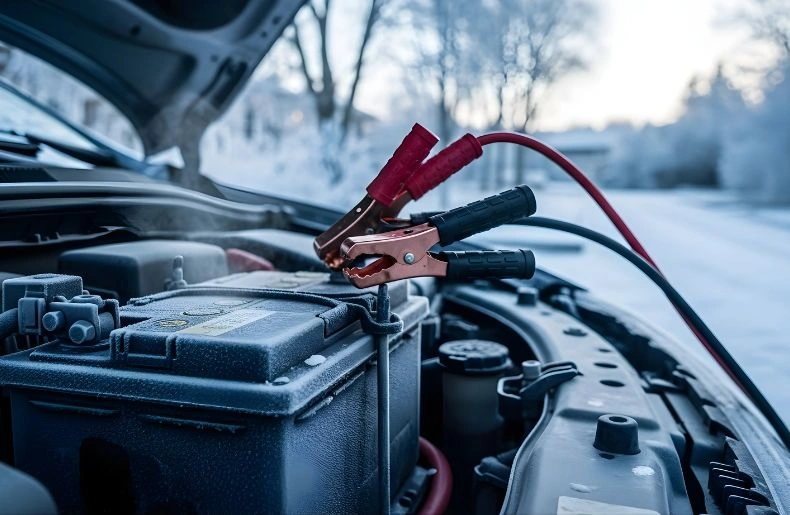
You know the shock of a car that won’t start on a cold morning. I explain why low temperatures make batteries weaker and why your engine needs more power just when the battery can give less. A cold battery loses chemical strength and delivers less current, so your car may fail to start even if the battery worked fine in warmer weather.
I show how to spot warning signs like slow cranking or dim lights, what speeds up battery decline, and simple steps to protect or revive a weak battery. I also cover how to pick a better battery for cold climates and when it’s time to replace it so you aren’t stranded.
Key Takeaways
- Cold reduces battery capacity and raises starting demand.
- Watch for slow cranks, dim lights, or electronics acting up.
- Use maintenance, proper battery choice, and timely replacement to avoid winter failures.
Why Cold Weather Causes Car Battery Issues
I explain how cold slows the battery’s internal chemistry, cuts the battery’s usable charge, and makes the engine need more power. Each factor strains the battery on cold mornings and raises the chance of a no-start.
Impact of Low Temperatures on Chemical Reactions
I know that lead-acid batteries rely on chemical reactions between lead plates and sulfuric acid to make electrical current. Cold temps slow those reactions, so the battery produces less current for the starter and accessories.
When the electrolyte temperature drops, ion movement slows and internal resistance rises. That means less current reaches the starter even when the battery’s state of charge looks normal. Batteries that are already weak or old show this effect more strongly.
I check battery temperature ratings when advising drivers. A typical lead-acid battery loses significant cranking amps below freezing, so cold itself doesn’t instantly kill a healthy battery, but it can expose poor capacity or bad cells.
How Cold Affects Battery Capacity
I measure capacity as the total charge a battery can deliver at a given temperature. Capacity falls as temperature falls: at 0°F (-18°C) a typical lead-acid battery can provide only about half its rated cold-cranking ability compared with 80°F (27°C).
This drop means the battery’s reserve minutes shrink and electronics draw a larger slice of usable energy. Repeated cold exposure shortens battery life because sulfation and other degradation accelerate when the battery is run low in cold conditions.
I recommend testing batteries before winter and replacing units older than about 3–5 years. A battery load test or a CCA (cold cranking amps) check shows if capacity is still adequate for your vehicle’s demands in cold weather.
Increased Engine Starting Demand
I note that engines need more power to start in cold weather. Oil thickens and pistons and rings have higher friction at low temps, so the starter motor must work harder and longer.
Modern cars add more electrical load at startup too — heated seats, defrosters, fuel pumps, and engine management systems all draw current. That increases the peak discharge the battery must supply right when its capacity is reduced.
I advise minimizing accessory use before the engine starts and ensuring the battery’s CCA rating matches the vehicle. If the battery struggles on cold starts, a higher-CCA replacement or an engine block heater can cut the load and improve reliability.
Common Symptoms of Car Battery Problems in Cold Weather
I watch for a few clear signs when temperatures drop. These signs tell me the battery can’t deliver enough power, that the charging system might be stressed, or that the battery is near the end of its life.
Slow Engine Cranking
The engine turns over slowly or sounds labored on cold mornings. I notice longer cranks before the engine fires because cold thickens oil and slows the battery’s chemical reactions. If starting goes from a quick spin to a sluggish grind, the battery’s cold cranking amps (CCA) may be insufficient or the battery may be weak.
I check for consistent slow cranking rather than a one-time hiccup. A load test at a shop or a quick test with a multimeter can show low voltage under load. For reference on battery testing and CCA, I trust resources like the AAA battery advice pages.
Dim Headlights and Electrical Failures
Lights that dim when I start the car or flicker while idling point to low battery output. I see headlights noticeably weaker at night or dashboard lights fade during attempts to start. Other electronics—radio, power windows, heated seats—may work slowly or cut out.
I separate alternator issues from the battery by observing whether lights brighten after the engine runs. If brightness returns after the car runs, the alternator may be charging; if not, the battery likely can’t hold charge. For clear guidance on diagnosing electrical symptoms, I refer to trusted repair manuals and automotive sites like the National Highway Traffic Safety Administration (NHTSA).
Frequent Jump Start Needs
Needing jump starts several times in cold weeks is a red flag for me. One jump start can happen from leaving lights on, but repeated jumps mean the battery isn’t holding charge or the charging system fails. I track each incident’s cause—parasitic draw, short trips that don’t recharge the battery, or age.
I replace a battery that requires repeated jumps rather than risking getting stranded. Before replacing, I test the battery and alternator at a shop. If the battery is older than three to five years, I treat repeat jump starts as a likely sign to replace it.
Factors That Worsen Car Battery Performance When Cold
I’ll point out the main causes that make a battery struggle in cold weather: age and wear, bad electrical connections, and electrical drains that keep drawing power. These problems cut available cold-cranking amps, reduce charging efficiency, and raise the risk of a no-start.
Aging or Worn-Out Batteries
I check the battery’s manufacture date and state of health first. As batteries age, their internal plates corrode and sulfate builds up, which lowers capacity and reduces cold-cranking amps. A two- to four-year-old battery can still be fine, but past three years I watch for signs like slow starts, dim lights, or a need for frequent jump starts.
Cold makes chemical reactions inside the battery slower, so an old battery that had 100% capacity in summer might drop to 50% or less in freezing weather. I recommend testing with a load tester or a digital battery analyzer when temperatures fall below freezing. If the battery fails a test or is near the end-of-life based on dates and symptoms, replacing it before deep cold sets in is the safest step.
Corroded or Loose Battery Connections
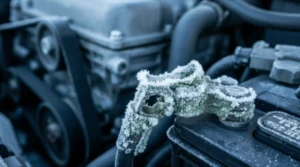
I always inspect terminals and clamp tightness because resistance at connections is a common, fixable issue. Corrosion (white or greenish buildup) and loose clamps raise resistance and cut the current the starter can draw. That small resistance problem becomes much bigger in cold weather when the battery’s available power is already reduced.
Cleaning terminals with a wire brush and baking soda solution, then tightening clamps to the manufacturer torque, often restores reliable starting. I also check cable condition and ground straps for frays or rust. If corrosion returns quickly or clamps won’t hold, I replace the hardware to avoid sudden failure on a cold morning.
Parasitic Electrical Drains
I look for devices that draw current when the car is off. Common drains include glovebox lights, aftermarket alarms, GPS trackers, and faulty modules. A small continuous draw can discharge a marginal battery enough that it won’t start after a cold night.
To find a drain, I use a multimeter set to amps and pull fuses one at a time while watching the current drop. Anything over about 50 milliamps on a modern car is worth checking. Fixing the faulty circuit, removing unnecessary accessories, or installing a battery disconnect switch can prevent slow drains from turning into a dead battery in low temperatures.
Prevention and Maintenance Tips for Winter Battery Reliability
I focus on simple, steady care that keeps a battery strong when temperatures drop. Small steps—testing, cleaning, and proper insulation—cut the risk of a no-start in cold weather.
Regular Battery Testing
I test my battery at least once before winter and again midseason. A digital voltmeter should read about 12.6 volts on a healthy, fully charged battery at rest. If it reads 12.4 volts or lower, I charge it or have it load-tested.
I also use a load tester or visit a shop that performs a CCA (cold cranking amps) test. That shows whether the battery can deliver the current needed to start the engine in cold conditions. I replace batteries that lose more than 20% of rated CCA for winter use.
Keep a maintenance schedule: check state of charge monthly, especially after short trips. I record voltage and any slow crank symptoms so I can catch decline before failure.
Cleaning Terminals and Connections
I inspect battery terminals and cable ends every few weeks in winter. Corrosion and loose clamps raise resistance and reduce starting current, so I clean them when I see a white, green, or blue powder.
To clean, I disconnect the negative cable first, then the positive. I scrub terminals and clamp interiors with a wire brush and a paste of baking soda and water to neutralize acid. After rinsing and drying, I coat terminals with a thin layer of dielectric grease or petroleum jelly to slow future corrosion.
I also check cable insulation and the ground strap. Replace frayed cables or tighten loose clamps. Good electrical contact prevents voltage drop when the starter needs the most power.
Using Battery Insulation Blankets
I consider a battery blanket when temperatures drop below freezing regularly. An insulation blanket wraps the battery and reduces heat loss, helping the battery maintain voltage and CCA output.
Choose a blanket rated for automotive batteries and sized to fit your case. Many use hook-and-loop straps for a snug fit. Some blankets include a thermostat and heater; I plug those into a switched power source or a dedicated outlet per the manufacturer’s instructions.
Install the blanket with terminals accessible for inspection. Remove it if charging the battery outside of a temperature-controlled device, unless the blanket is designed for charging use. Proper insulation can extend usable capacity and reduce winter starting problems.
Proper Steps for Jump Starting a Cold Car Battery
I keep the right tools, follow a clear order, and watch for sparks and heat. Doing steps in the right sequence lowers risk and gives the dead battery the best chance to start.
Safe Connection Procedures
I park both cars close enough so the jumper cables reach but not touching. I turn off both ignitions, set parking brakes, and put both vehicles in Park or Neutral. I wear gloves and safety glasses to protect my hands and eyes.
I connect the red (positive) clamp to the dead battery’s positive terminal first. Then I attach the other red clamp to the good battery’s positive terminal. Next, I attach the black (negative) clamp to the good battery’s negative terminal.
I do not connect the black clamp to the dead battery’s negative terminal. Instead, I clamp it to a clean, unpainted metal surface on the car with the dead battery—away from the battery and the fuel system. This reduces spark risk near battery gas.
Allowing Sufficient Charging Time
After I double-check clamps are tight and clear of moving parts, I start the donor car and let it idle. I let the donor car run for 3–5 minutes to push charge into the dead battery before trying to start the dead car.
If the dead car won’t start, I wait another 2–3 minutes and try again. I avoid repeated long cranking; I crank for no more than 10–15 seconds at a time with 30–60 seconds rest between attempts to prevent overheating the starter.
Once the dead car starts, I keep both engines running for at least 10–20 minutes. If possible I drive the car for 20–30 minutes to let the alternator fully recharge the battery, especially in cold weather.
Precautions to Avoid Battery Damage
I inspect the battery for cracks, bulging, or leaks before connecting cables. If I see damage or smell a strong rotten-egg odor (hydrogen gas), I do not jump-start and call for professional help.
I use cables rated for the vehicle’s size—thicker gauge for trucks or diesels. I avoid letting clamps touch each other during the process. I never reverse the polarity; connecting positive to negative can destroy electronics and cause a battery to explode.
After successful start, I remove cables in reverse order: black from grounded metal, black from donor, red from donor, and red from the formerly dead battery. I watch for overheating clamps or faint smoke; if either appears, I stop and seek help.
Choosing the Right Battery for Cold Climates
I focus on three things: enough cold-cranking power for your engine, the battery chemistry and design that resists freezing and discharge, and a warranty that reflects real lifespan under harsh winter use.
Cold Cranking Amps Rating
I look for the Cold Cranking Amps (CCA) number first. CCA tells how much current the battery can supply for 30 seconds at 0°F before voltage falls to a level that won’t start the engine. Choose a battery with CCA at or above your vehicle maker’s recommendation. If you live where temperatures regularly drop below 0°F, I pick a battery with 20–30% higher CCA than the factory spec.
Higher CCA helps when oil thickens and starters draw more power. Check the battery label for CCA and the date code. A high-CCA battery still needs good terminal condition and charging to perform well.
Battery Type Considerations
I weigh lead-acid flooded, AGM, and lithium options. Flooded (standard) batteries cost less but lose capacity faster in cold and need more maintenance. AGM (Absorbed Glass Mat) resists vibration, holds charge better, and usually delivers stronger starting power in subfreezing weather. AGM is my common recommendation for cold climates.
Lithium (LiFePO4) is lighter and keeps capacity in cold better when warmed and managed, but it often needs a battery management system and a compatible charging profile. I avoid generic lithium for older cars unless the vehicle’s electrical system supports it.
Warranty and Longevity Factors
I check the warranty terms and pro-rated vs. free-replacement periods. A good cold-weather battery often has at least a 3–5 year warranty with a clear free-replacement window in the first 1–2 years. Read the fine print for prorated charges after free-replacement ends.
I also factor in reserve capacity, build quality, and corrosion-resistant terminals. Batteries used in short-trip driving and with heavy accessory loads wear faster. I recommend keeping purchase receipts and date-stamped installation records to make warranty claims smoother.
When to Replace Your Car Battery After Cold Weather Problems
I check the battery if my car struggles to start more than once after a cold snap. A single slow crank might mean a temporary drain, but repeated hard starts or no-starts signal the battery is losing capacity.
I look for these signs: a swollen or cracked case, corrosion on terminals, a dashboard battery warning light, or headlights that dim when idling. If the battery is over 3–4 years old and shows any of these issues, replacement is usually the safest choice.
I use a load test or have a shop test the battery voltage and cold-cranking amps (CCA). Many shops and roadside services like AAA offer free or low-cost testing to verify battery health and CCA performance. If the test shows low CCA or a bad cell, I replace the battery.
I also consider recent repairs and charging history. If the alternator or charging system failed during cold weather, a good battery may have been drained and damaged. In that case, I fix the charging issue first, then install a new battery if tests still show poor capacity.
I choose a battery with the right CCA rating for my climate and vehicle. For guidance on CCA ratings and winter care, I consult resources like the Department of Energy and major auto retailers to pick a reliable replacement and improve cold-weather reliability.
Long-Term Solutions for Preventing Cold Weather Battery Failures
I focus on three practical fixes that reduce cold-weather failures: keeping the engine and battery warm, parking in a controlled space, and following a seasonal maintenance routine that keeps battery health strong.
Installing Engine Block Heaters
I recommend installing an engine block heater if you live where temperatures fall below 20°F (-7°C). A block heater warms the engine coolant or oil, which cuts the strain on the battery during cold starts. Plug the heater into a standard 120V outlet two to three hours before starting in very cold weather, or use a timer to save energy.
Choose a heater sized for your engine and install it where the manufacturer directs. Have a qualified mechanic fit it to avoid leaks or electrical faults. For more on types and installation, I reference guidance from the Department of Energy and vehicle-specific service manuals.
Storing Vehicles Indoors
Parking inside a heated or insulated garage significantly reduces battery stress. I move cars indoors when temperatures drop below freezing, especially for vehicles I won’t drive daily. Even an unheated garage helps by keeping battery temps several degrees warmer than outside.
If indoor parking isn’t available, use a high-quality battery blanket or insulated cover and park in a sheltered spot facing away from prevailing winds. For long-term storage, disconnect the negative terminal and connect a smart maintainer to prevent parasitic drain and sulfation.
Seasonal Battery Maintenance Plans
I create a simple seasonal plan: inspect, test, clean, and top up as needed every fall and mid-winter. Start with a full load test at 70% or higher state of charge; replace batteries older than four years or that fail a load test. Clean terminals with a wire brush and baking soda solution, then apply dielectric grease or terminal protector spray.
Use a digital multimeter to check resting voltage (12.6V+ is healthy). If voltage falls below 12.4V after a full charge, perform a capacity test or use a smart charger overnight. I follow manufacturer service intervals and keep records of battery age, tests, and charger usage. For test procedures and safe charging, I refer to resources from the Battery University and auto service guides.
FAQs
Q: Can cold weather actually kill my car battery?
Yes. Cold slows the chemical reactions inside the battery, so it delivers less power. I’ve seen batteries that worked in mild weather fail when temperatures dropped.
Q: How can I tell if the battery is weak or something else is wrong?
Look for slow cranking, dim lights, or a clicking sound when you turn the key. I check battery age first; most fail after 3–5 years, especially after harsh winters.
Q: Will charging help a cold battery?
A full charge can restore some capacity, but a severely degraded battery may not hold charge well. I use a smart charger to bring a cold battery up slowly and safely.
Q: What quick fixes work when I’m stranded?
Jump-starting or using a portable battery pack gets the car running. I advise running the engine or driving for at least 20 minutes afterward to help recharge the battery.
Q: How do I prevent winter battery problems?
Park in a garage when you can, avoid short trips, and keep battery terminals clean. I also recommend checking cold-cranking amps (CCA) and replacing old batteries before winter.
Q: Are battery heaters or blankets worth it?
Yes, in very cold climates they help maintain battery temperature and starting power. I use them for vehicles that sit outside overnight.
Battery basics
- Keep terminals clean.
- Test battery before winter.
- Replace older batteries proactively.
Conclusion
I’ve shown how cold reduces a battery’s chemical reactions and raises the engine’s starting demand. That combination makes weak batteries fail more often in winter.
Take simple steps I recommend: keep the battery charged, park in a warmer spot if possible, and test battery health before cold weather hits. These actions cut the chance of being stranded.
If a battery is old or has low cold cranking amps, I advise replacement. A healthy, correctly rated battery performs much better in low temperatures.
