

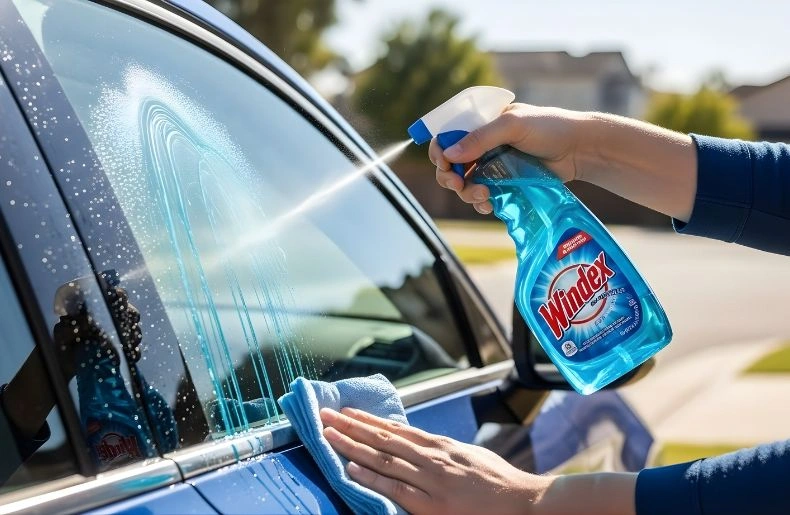
You’re standing in your garage with a bottle of Windex, looking at your streaky car windows, and wondering if this household staple will do the trick. It’s a question thousands of car owners ask themselves every week.
Can you use Windex on car windows, but there are important considerations to keep in mind. While Windex and similar ammonia-based cleaners can effectively clean automotive glass, they’re not always the best choice for every situation.
Your car’s windows face unique challenges compared to household glass exposure to road grime, weather elements, and potential damage to surrounding materials. In this comprehensive guide, we’ll explore when Windex works well, when you should avoid it, and what alternatives might serve you better for keeping your car windows crystal clear.
Understanding Windex and Automotive Glass
Before you go thinking about whether you should spray that blue liquid onto your windshield, it’s good to know what goes into it. Windex is an ammonia-based glass cleaner and has been a household staple for years. Most formulas contain a combination of ammonia, water, detergents, and alcohol that team up to cut grease and grime but beat a hasty retreat without leaving any residue.
This duo makes it one of the best for windows and mirrors in the house. There are a number of different kinds of glass, but car windows aren’t quite as much like the glass in your home. These days, a lot of windows even have built-in glass treatments like UV-protecting layers and water-repellent coatings; rear windows may even have embedded heating!
Moreover, automobile glass is forever being subjected to the rigors of use bugs, tree sap, road tar, soot remnants in exhaust fumes, wind and heat whiplash, changes in weather. That’s why your car windows require a cleaning method that is effective and safe for all elements.
When You Can you use Windex on car windows
There are definitely situations where using Windex on your car windows makes perfect sense. If you’re cleaning the exterior glass surfaces and your windows don’t have aftermarket tinting, Can you use Windex on car windows The ammonia formula excels at cutting through fingerprints, dust, and light dirt accumulation. Many car owners successfully use Windex for quick touch-ups between more thorough detailing sessions.
The key is application technique. When using Windex on automotive glass, spray it directly onto a microfiber cloth rather than onto the window itself. This prevents overspray from reaching vulnerable surfaces like rubber trim, plastic components, or your dashboard.
Use separate clean microfiber towels for wiping and buffing one slightly damp with cleaner for the initial wipe, and a dry one for achieving that streak-free finish. Work in straight lines rather than circular motions to avoid streaking, and tackle your windows when they’re cool to the touch, preferably in shade to prevent the cleaner from evaporating too quickly and leaving residue.
For exterior windows without special coatings or tint, Windex can deliver satisfactory results at a fraction of the cost of specialized automotive glass cleaners. It’s particularly useful for those minor cleaning tasks removing fresh bug splatter after a drive, wiping away fingerprints from handling windows, or doing a quick clean before an important meeting.
When to Avoid Using Windex on Your Car
Knowing when you don’t need Windex is just as important as knowing when you do. The one that poses the greatest threat is window tinting. For those who have aftermarket tint film on any windows of their vehicle, ammonia-based cleaners like Windex will be the enemy. Ammonia destroys the adhesive that holds tint film in place, so it flakes off, bubbles up , or changes color. This damage is generally not reversible, and you will have expensive tint replacement.
Even factory-tinted windows can go bad, though they’re usually more durable than aftermarket films. Interior glass and caution cesanration interior glass cleaning demands greater care. Because when you’re wiping down the inside of your windshield and side windows, there’s always a chance Windex will drip onto your dashboard or door panels, or worse, onto the seats.
Leaks from ammonia, for example, can over time crack vinyl, cause leather to fade, and create permanent discolouration on a number of surfaces in the interior. The enclosed nature of a vehicle creates an environment in which overspray is nearly impossible to avoid, and even low levels of ammonia will accumulate over time.
The Step-by-Step Process for Using Windex Safely
If you’ve determined that using Windex on your car windows is appropriate for your situation, following the correct process ensures the best results while minimizing risks.
Step 1: Gather Your Materials
- Original Windex or similar ammonia-based glass cleaner
- Two or three clean microfiber towels
- A spray bottle with plain water (for dilution if needed)
Step 2: Prepare the Area
Park your car in a shaded location and ensure windows are cool. Hot glass causes cleaners to evaporate rapidly, leaving streaks. Check weather conditions—avoid cleaning in direct sunlight or if rain is expected soon.
Step 3: Spray the Cloth, Not the Window
This is crucial. Spray Windex generously onto your microfiber cloth until it’s damp but not dripping. Never spray directly onto the window where overspray can reach surrounding materials.
Step 4: Wipe in Straight Lines
Starting at the top corner, wipe across the window in horizontal straight lines, slightly overlapping each pass. This technique prevents streaking better than circular motions.
Step 5: Buff with a Dry Towel
Immediately follow with a clean, dry microfiber towel, using the same straight-line motion. This removes any remaining moisture and ensures a crystal-clear finish.
Step 6: Inspect and Touch Up
Step back and look at the window from different angles. Any remaining streaks or spots should be addressed immediately with a lightly dampened cloth and quick buff.
Better Alternatives to Windex for Car Windows
Although you can use Windex on car windows sometimes, specialized automotive glass cleaners typically work better and come with fewer hazards. These are formulated for automotive use and address all the issues that household cleaners do not.
For car windows, ammonia-free auto glass cleaners are the gold standard. Invisible Glass, Stoner Glass Cleaner and Meguiar’s Perfect Clarity are brands that provide aggressive cleaning without the dangers of ammonia. They’re safe for tinted windows, safe if you overspray them on your dash and door panels, and formulated to work through the kinds of grime typically caked onto automotive glass like road film, that gummy residue made up of diesel exhaust, tire smoke and environmental nastiness.
You can also make your own inexpensive DIY car window cleaner. Combine equal parts distilled white vinegar and water in a spray bottle, then add several drops of dish soap to boost cleaning power.
Common Mistakes When Cleaning Car Windows
Even with the right products, enormously. One of the biggest mistakes people make is using paper towels instead of microfiber cloths. Paper towels may seem convenient, but they leave lint, create tiny scratches over time, and don’t absorb as effectively as microfiber. Invest in quality microfiber towels designed for glass cleaning—they’re reusable, more effective, and gentler on your windows.
Many streaking and haze issues come down to simple mistakes:
- Using paper towels instead of microfiber
- Applying too much cleaner
- Cleaning in direct sunlight
- Ignoring the top edge of roll-down windows
- Focusing only on the windshield
Long-Term Care Tips for Crystal-Clear Windows
Regular light maintenance reduces the need for aggressive cleaning. Wiping exterior glass weekly with water and microfiber prevents grime from bonding to the surface.
Applying a water-repellent coating improves visibility in rain and makes future cleaning easier. Inside the vehicle, using sunshades helps reduce interior film caused by dashboard outgassing. Avoid smoking inside the car, as smoke residue creates stubborn buildup on glass.
Conclusion
So, can you use Windex on car windows? Absolutely but with important caveats. For exterior glass without tinting or special coatings, Windex can effectively clean your windows when applied correctly using microfiber cloths and proper technique.
However, the risks to window tint, interior surfaces, and special glass treatments mean that dedicated automotive glass cleaners or ammonia-free alternatives are often the smarter choice, especially for interior cleaning and tinted windows.
The key takeaways are simple: always spray cleaner onto your cloth rather than directly onto glass, avoid ammonia-based products on tinted windows, use quality microfiber towels instead of paper products, and clean windows when they’re cool and shaded. Whether you choose Windex, a specialized automotive cleaner, or a homemade solution, consistent maintenance and proper technique matter more than the specific product you select.
