

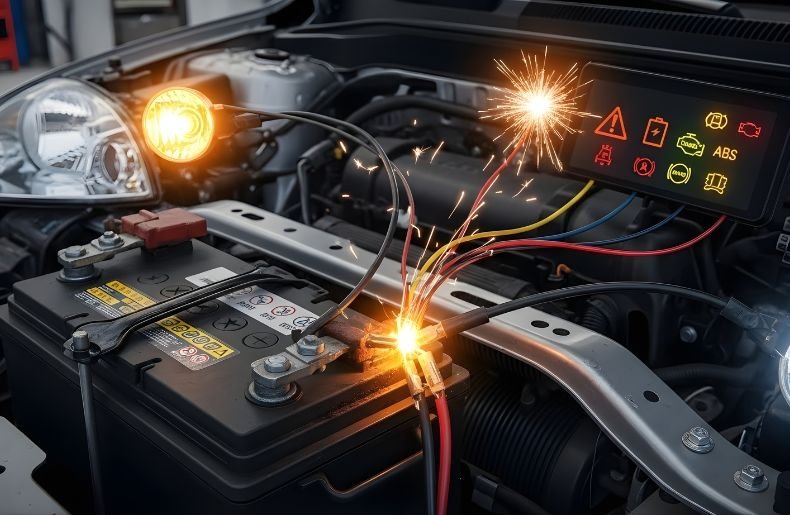
You might think the battery only helps start the car, but it also keeps your whole electrical system stable. A failing battery can absolutely cause electrical problems like dim lights, slow cranking, strange warning lights, and intermittent failures of electronic systems. I’ll show you how to spot the signs and what to do next so you don’t get stranded or face costly repairs.
You’ll learn how a weak battery mimics other faults, how to tell battery problems from alternator or wiring issues, and simple checks you can do yourself. I’ll also cover quick fixes and steps to prevent future electrical headaches so you can keep your vehicle running reliably.
Key Takeaways
- A bad battery can create a range of electrical faults across your vehicle.
- Simple tests can help distinguish battery failure from other electrical issues.
- Timely checks and proper maintenance prevent most battery-related problems.
Understanding the Relationship Between Car Batteries and Electrical Systems
I explain how the battery supports the car’s electronics, how a failing battery can cause specific faults, and the common signs to watch for. This helps you know when the battery is the likely cause and when other components need checking.
How Car Electrical Systems Rely on the Battery
I see the battery as the central power reservoir for the vehicle. It supplies the steady 12-volt baseline that the starter, engine control unit (ECU), lights, and accessories need when the engine is off or during low alternator output.
When you start the car, the battery delivers a large current to the starter motor. After the engine runs, the alternator usually takes over and recharges the battery. But the battery still smooths voltage spikes and provides reserve power when electrical demand exceeds alternator output.
Poor battery capacity or bad connections let voltage drop below required thresholds. That low voltage makes modules reset, sensors misread, and relays chatter. I always check battery voltage and terminal condition first when multiple unrelated electrical faults appear.
Types of Electrical Issues Linked to Battery Failure
A weak battery can cause transient faults and long-term module errors. Transient faults include dim headlights, slow starter crank, and random warning lights that clear after a restart.
More serious effects include ECU resets, transmission shift problems, and failure of safety systems like ABS or airbags if voltage falls during key operations. Corroded or loose battery terminals can cause intermittent power cuts that mimic wiring harness faults.
Sometimes a bad battery stresses the alternator and leads to alternator failure. I also see bad batteries trigger stored trouble codes that point at other parts; those codes may be misleading until the battery is fixed or replaced.
Common Symptoms of Battery-Related Electrical Problems
Look for these clear signs that point to the battery: slow engine crank, dim or flickering interior and exterior lights, and warning lights that appear without a clear pattern.
You may also see accessories that reset (clock, radio presets) after shutdown, or modules that act erratically under load, like unstable idle or stalled starts. Physical signs matter too: a swollen battery case, corrosion on terminals, or a battery older than three to five years increases the likelihood of electrical issues.
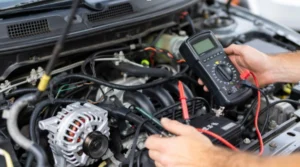
I recommend testing with a multimeter: resting voltage below 12.4 V or load test failure means the battery likely causes the faults. If voltage is good, then investigate alternator output and wiring next.
How a Bad Battery Can Cause Electrical Issues
A weak or failing battery creates unstable voltage, disrupts electronic control, and can make dashboard warnings and lights behave oddly. I explain how low battery voltage leads to system flaws, how sensors and control modules react, and why dashboard functions often show the first signs.
Voltage Irregularities and System Malfunctions
Low battery voltage means the car’s 12‑volt system can’t keep a steady supply when accessories or the starter demand power. I see alternators try to compensate by outputting more current, which can cause overcharging or voltage spikes that stress wiring and components. That instability can make relays chatter, motors run weakly, and cause modules to reset unexpectedly.
Short voltage dips during cranking can interrupt communication on vehicle networks like CAN bus. I recommend testing battery voltage at rest (about 12.6V), at crank (shouldn’t drop below ~9.6V), and while running (about 13.5–14.5V). For more on testing procedures, I refer readers to battery basics at the National Renewable Energy Laboratory and battery care guidance from AAA.
Effects on Sensors and Electronic Modules
Modern sensors and engine control units need stable voltage to measure and process signals correctly. A fluctuating supply changes sensor reference voltages, which can produce false readings for mass air flow, oxygen sensors, throttle position, and more. I have seen sensors report out‑of‑range values simply because the battery couldn’t hold voltage, triggering error codes.
Electronic control modules may reset or enter limp mode when they detect unpredictable power. Repeated resets can corrupt adaptive learning values in transmission and engine ECUs, leading to drivability issues. If you see intermittent faults or many unrelated error codes, checking battery health and grounding should be one of your first diagnostic steps.
Impact on Dashboard Functions
The dashboard is often the first place low battery effects appear. I notice dim or flickering headlights and instrument lights, stray warning lamps, and odd gauge behavior when the battery voltage falls. Infotainment systems may reboot, clocks lose time, and power windows or locks work slowly or not at all.
Because many warnings rely on stable power for accurate self tests, a bad battery can cause persistent false alarms or mask real faults. If multiple unrelated dashboard lights come on together, I check battery state of charge and terminal connections before chasing wiring harnesses or control modules.
Distinguishing Battery Issues From Other Electrical Problems
I focus on quick checks that point to the real cause: whether the battery, alternator, wiring, or a parasitic drain is at fault. The tests below use voltage readings, starting behavior, and visible signs to separate these issues.
Differences Between Battery Failure and Alternator Problems
I test the battery with a multimeter. A healthy, resting battery reads about 12.6 volts. If it shows under 12.2 V, the battery is weak or sulfated and likely needs replacement or charging.
I then run the engine and measure voltage across the battery terminals. If the voltage rises to about 13.8–14.6 V, the alternator is charging correctly. If it stays below 13 V, the alternator may not be charging. If the voltage goes above 15 V, the alternator or voltage regulator could be overcharging.
I also watch symptoms: slow cranking or no-start on its own points to the battery. Dim lights that get brighter once the engine runs often point to the alternator. Warning lights like OBS or battery icons during driving usually mean charging system trouble.
Diagnosing Wiring and Fuse Faults
I inspect fuses and visible wiring first. A blown fuse or a corroded connector often causes a single accessory to fail while other systems work fine. I use a test light or multimeter to check for power and ground at the device.
I look for burnt, melted, or frayed wires and loose battery terminals. Voltage drops across long wires or poor grounds cause lights to dim or modules to reset. I measure voltage at the component while it runs; a large drop from the battery voltage shows wiring trouble.
I also wiggle connectors while watching symptoms. If a device acts up only when a wire is moved, that points directly to a wiring or connector fault rather than the battery or alternator.
Recognizing Parasitic Drain
I check for parasitic drain by measuring current from the battery with everything off. Typical draw is below 50 mA on modern cars; anything above 50–100 mA is high and will drain the battery overnight.
I isolate the circuit by pulling fuses one at a time while watching the ammeter. When the current falls sharply after removing a fuse, I find the offending circuit. Common culprits include aftermarket electronics, glove-box lights, trunk lights, and body control modules.
I also note how fast the battery discharges. A battery that dies only after many hours or days suggests parasitic draw. Rapid failure at startup points more to a bad battery or charging problem.
Diagnosing a Bad Battery
I focus on quick checks, basic tools, and knowing when to seek professional testing. These steps help tell if the battery itself causes electrical problems or if the issue lies elsewhere.
Simple Tests to Assess Battery Condition
I start with visual and basic operational checks. Look for cracked casing, bulging, or heavy corrosion on terminals. Clean terminals with a wire brush if needed and tighten loose cables.
Try a cold crank test: turn the key and note how fast the engine cranks. Slow cranking or clicking usually points to a weak battery. Also check dashboard lights and headlight brightness with the engine off; dim lights suggest low battery voltage.
If you have jump-started recently, note how often you need it. One jump after sitting a long time is different from repeated jumps after short drives. Keep a log to see patterns.
For safety, wear gloves and eye protection when inspecting the battery. If you see acid leaks, remove the battery from the vehicle only if you are confident and follow manufacturer guidance.
Using Multimeters and Diagnostic Tools
I use a digital multimeter to measure resting voltage and charging voltage. With the engine off, a healthy battery reads about 12.6 volts. Under 12.2 volts indicates a significantly discharged battery. With the engine running, voltage should sit between 13.7 and 14.7 volts if the alternator is charging correctly.
Perform a load test if available. Many auto parts stores offer free battery load testing with professional tools. A failed load test means the battery can’t hold voltage under demand.
OBD-II scanners can reveal electrical faults and communicating module errors caused by low voltage. For step-by-step guidance on using a multimeter and common volt ranges, I often reference resources like the EPA or manufacturer service manuals and reputable guides from AutoZone.
When to Perform a Professional Battery Test
I recommend a professional test when symptoms persist after simple fixes. Bring the battery to a shop if you’ve cleaned terminals, charged the battery, and still have slow cranking, dim lights, or random warning lights.
Get a shop to perform a conductance or load test. These tests measure internal resistance and capacity more accurately than a basic multimeter. They also test the charging system to rule out alternator problems.
Ask for a printed test result and a clear recommendation — replace, repair, or continue monitoring. If the battery is over three to five years old, I usually replace it when test results are marginal to avoid being stranded.
Resolving Electrical Issues Caused by a Bad Battery
I explain how to remove and fit a new battery safely and how to restore your car’s electronics so systems like radio presets, power windows, and ECU settings work again. Follow steps carefully and use the right tools to avoid damage.
Steps to Replace a Faulty Battery
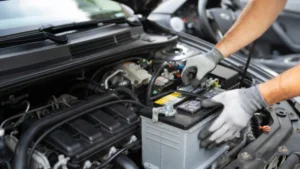
I begin by parking on level ground, turning off the ignition, and setting the parking brake. I wear gloves and eye protection. I locate the battery, note which terminal is negative (−) and positive (+), and take a photo of cable positions for reference.
I always disconnect the negative terminal first to reduce short risk, then the positive. I loosen the hold-down clamp and lift the battery straight out using both hands or a battery strap. When installing the new battery, I set it in the tray, secure the clamp, then connect positive first and negative last.
I torque terminals to manufacturer specs if possible (often 7–10 ft·lb for many cars). I clean any corrosion with a baking soda paste and a wire brush before connection. I dispose of the old battery at a recycling center or parts store.
Resetting Vehicle Electronics After Battery Replacement
I check and reset basic items immediately: clock, radio presets, and seat memory. I consult the owner’s manual for specific steps because some cars need a pairing sequence for key fobs or steering angle sensors.
If warning lights appear, I first drive the car for 10–20 minutes to let the alternator and ECU relearn idle and charging patterns. For persistent check-engine or ABS lights, I use an OBD-II scanner to read and clear codes. If codes return, I address the underlying fault or see a technician.
For cars with complex systems, I follow any manufacturer reset steps—like holding the horn button for a minute, cycling the ignition a set number of times, or performing a learn procedure for automatic windows. I always verify that safety systems (airbags, ABS, traction control) report normal status before regular use.
Preventative Measures for Avoiding Battery-Induced Electrical Issues
I focus on clear, practical steps you can take to prevent a weak battery from causing electrical faults. These steps cover routine checks, safe connections, and watching how you use electrical accessories.
Regular Battery Maintenance Tips
I check the battery every month for leaks, cracked casing, and loose terminals. I clean corrosion with a baking soda and water paste and a stiff brush, then tighten terminals to the manufacturer’s torque specs. If you have a maintenance-free battery, still inspect terminals and hold-down clamps.
I test battery voltage with a multimeter: a healthy, rested battery reads about 12.6 volts. Under 12.4 volts suggests discharge; 12.0 volts or less means replacement. I also load-test at a shop when the battery is over three years old or if cranking is slow.
I keep battery trays dry and ensure vent caps are intact on serviceable batteries. For long storage, I use a smart trickle charger or maintainer to prevent self-discharge. For detailed safety and handling guidance, I follow advice from the National Highway Traffic Safety Administration (NHTSA) and manufacturer’s manuals.
Monitoring Electrical Load and Usage
I track how I use electronics so I don’t drain the battery with lights, infotainment, or accessories while the engine is off. A parasitic draw test helps find hidden drains like aftermarket alarms or faulty modules. I can use a multimeter in series to measure milliamps and compare against normal draw values (usually under 50 mA).
I watch dash warning lights and dimming headlights as early signs of charging or battery problems. If the alternator isn’t keeping voltage above about 13.5–14.5 volts while the engine runs, I get the charging system inspected. For step-by-step testing on alternators and charging systems, I refer to trusted repair guides like those from AutoZone.
I avoid frequent short trips that prevent full charging. When I add high-power accessories, I upgrade wiring, fuses, and ground connections to match the added load and reduce the risk of voltage drops or electrical faults.
The Long-Term Impact of Neglecting Battery Problems
I have seen small battery issues turn into bigger electrical failures over time. A weak battery can cause repeated hard starts and stress the starter and alternator, which shortens their life and raises repair costs.
I also watch how unstable voltage affects electronics. Dim lights, flickering displays, and false warning lights can become chronic as the system struggles to get steady power. Safety features that rely on electronics can act unpredictably.
Neglected batteries can corrode terminals and wiring. Corrosion raises resistance and creates heat, which may blow fuses or damage connectors. Those faults often look like random electrical gremlins and are hard to trace.
There is a health and safety side too. Leaking batteries release corrosive acid and harmful metals. I avoid touching leaked material and recommend prompt replacement to prevent burns and toxic exposure.
I use this simple checklist when I suspect long-term damage:
- Check battery age and charge capacity.
- Inspect terminals and cables for corrosion.
- Test alternator output and starter draw.
- Replace battery before it causes other component failures.
Replacing a failing battery is usually cheaper than fixing the cascade of parts it can ruin. I recommend addressing battery issues early to protect the whole electrical system and reduce unexpected breakdowns.
FAQs
How do I tell if the battery is the problem?
I check for slow engine cranking, dim headlights at idle, and warning lights that come and go. I also look for corrosion on terminals and test voltage with a multimeter; resting voltage below about 12.4 V often means the battery is weak.
Can a bad battery make the car stall while driving?
It can, but it’s less common. If the alternator doesn’t compensate for a weak battery, voltage dips from high electrical loads can cause engine control systems to misbehave and lead to stalling.
Should I replace the battery or the alternator?
I test both. If the battery is old or fails a load test, I replace it. If the alternator isn’t keeping voltage near 13.5–14.5 V while running, the alternator needs attention.
Quick checklist I use:
- Check battery age and terminal condition.
- Measure resting and running voltage.
- Look for flickering lights or intermittent warnings.
- Run a professional battery/charging test if unsure.
If you want, I can walk you through basic battery tests or help interpret multimeter readings.
Conclusion
I found that a weak or failing battery can cause a wide range of electrical issues in a vehicle. It can lead to dim or flickering lights, warning lights on the dash, trouble starting, and strange behavior from electronic systems.
I recommend checking the battery and its connections first when electrical problems appear. A simple voltage check or a load test often shows whether the battery is the root cause.
If the alternator is overworking because of a bad battery, other parts can be stressed. Replacing the battery when it shows signs of failure helps protect the rest of the electrical system.
I keep these quick checks in mind:
- Visual inspection of battery and cables
- Battery voltage and load test
- Monitor for recurring warning lights
I advise addressing battery problems promptly. Timely replacement or repair prevents more expensive damage and restores reliable electrical performance.
